 https://www.maximeyes.com/wp-content/uploads/2026/10/hf_20261014_182325_8e5e8f8b-15f0-45d2-8bfe-dd8713779ad4.png
768
1376
Jayeesha D
https://www.maximeyes.com/wp-content/uploads/2025/04/maxim-eyes-logo-dark.svg
Jayeesha D2026-10-14 18:46:012026-10-14 18:46:01Where Eye Care Practices Lose the Most Time in Their Systems, and How to Fix It
 https://www.maximeyes.com/wp-content/uploads/2026/10/Sanity-Not-Replacement_-AI-Eye-Care.png
909
1730
Jayeesha D
https://www.maximeyes.com/wp-content/uploads/2025/04/maxim-eyes-logo-dark.svg
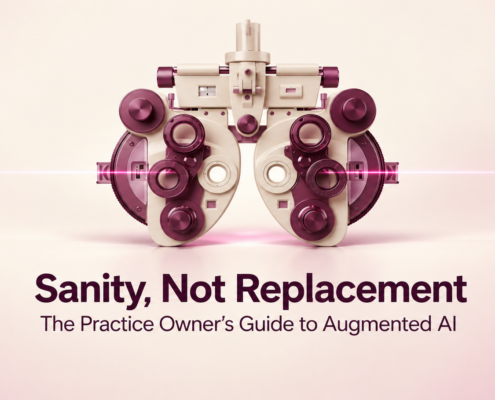
Jayeesha D2026-10-09 16:10:272026-10-14 14:54:45Sanity, Not Replacement: A Practical Guide to Augmented AI for Eye Care Practices
 https://www.maximeyes.com/wp-content/uploads/2026/10/hf_20261001_162859_877a24e8-24e0-4ba7-a224-ed69becf9235.png
896
1200
Jayeesha D
https://www.maximeyes.com/wp-content/uploads/2025/04/maxim-eyes-logo-dark.svg
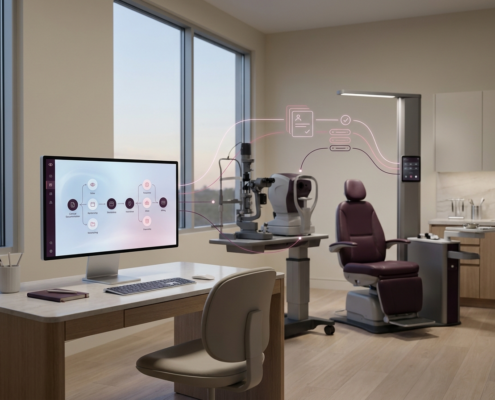
Jayeesha D2026-10-01 16:35:102026-10-14 17:23:14Back to the Roots: Why Augmented AI is About Sanity, Not Replacement
 https://www.maximeyes.com/wp-content/uploads/2026/09/hf_20260923_143301_80c7c048-9a79-4f79-88f5-4fa04b2e4410.png
768
1376
Jayeesha D
https://www.maximeyes.com/wp-content/uploads/2025/04/maxim-eyes-logo-dark.svg
Jayeesha D2026-09-23 14:51:372026-10-14 18:35:13The Eye Care Practices That Thrive Aren’t Necessarily the Ones That Grow the Fastest
 https://www.maximeyes.com/wp-content/uploads/2026/09/Youtube-Thumbnail-Image-5-1.png
1080
1920
Selina Rai
https://www.maximeyes.com/wp-content/uploads/2025/04/maxim-eyes-logo-dark.svg
Selina Rai2026-09-10 17:18:292026-10-13 15:55:36The Real Value of AI in Eye Care Is Time Back for Patient Care
 https://www.maximeyes.com/wp-content/uploads/2026/09/ChatGPT-Image-Sep-9-2026-12_19_06-AM.png
909
1731
Selina Rai
https://www.maximeyes.com/wp-content/uploads/2025/04/maxim-eyes-logo-dark.svg
Selina Rai2026-09-08 19:40:042026-09-08 19:40:04The Busiest Person in Your Practice May Not Be Your Most Productive
 https://www.maximeyes.com/wp-content/uploads/2026/08/ChatGPT-Image-Aug-28-2026-11_12_05-PM.png
909
1731
Selina Rai
https://www.maximeyes.com/wp-content/uploads/2025/04/maxim-eyes-logo-dark.svg
Selina Rai2026-08-28 19:02:122026-08-28 20:15:22Why Great Eye Care Practices Eventually Outgrow Their Systems
 https://www.maximeyes.com/wp-content/uploads/2026/08/hf_20260819_201001_6c4bd448-58a2-44f1-b82c-2688a2d2ed37-1.png
768
1376
Selina Rai
https://www.maximeyes.com/wp-content/uploads/2025/04/maxim-eyes-logo-dark.svg
Selina Rai2026-08-20 00:47:322026-08-20 01:39:04How Much Does an In-House Medical Biller Really Cost Your Eye Care Practice?
 https://www.maximeyes.com/wp-content/uploads/2026/08/busy-eye-care-practice-front-desk.jpg
1024
1536
Selina Rai
https://www.maximeyes.com/wp-content/uploads/2025/04/maxim-eyes-logo-dark.svg
Selina Rai2026-08-19 19:06:052026-08-19 19:06:05The Busiest Person in Your Practice May Not Be Your Most Productive
 https://www.maximeyes.com/wp-content/uploads/2026/08/ChatGPT-Image-Aug-11-2026-01_32_05-PM.png
941
1672
Selina Rai
https://www.maximeyes.com/wp-content/uploads/2025/04/maxim-eyes-logo-dark.svg
Selina Rai2026-08-11 20:34:032026-08-11 22:24:50When One Person Leaves, the Whole Practice Feels It