AI Isn’t Replacing Eye Care Professionals. It’s Giving Them a Second Set of Eyes.
Walk into almost any eye care conference today and you’ll hear the same conversation.
Artificial intelligence is everywhere.
It’s on exhibit hall banners, webinar agendas, product announcements, and social media feeds. Every company seems to have an AI story, and every week brings another headline about what artificial intelligence can do next.
For many practice owners, that’s exciting. For many doctors and staff members, it’s something else entirely. It’s uncertainty.
Questions begin to surface almost immediately.
- Will AI replace my staff?
- Will it make clinical decisions for me?
- If technology starts doing more, where does that leave the people who built this practice?
These aren’t unreasonable concerns. They’re human ones.
Healthcare has always been built on trust. Patients trust their doctors. Practices trust their teams. Introducing a technology that promises to change how work gets done naturally raises questions about what happens to the people doing that work today.
The conversation deserves more than marketing slogans. It deserves perspective.
Every Major Technology Shift Has Started With Fear
Electronic health records were once viewed with skepticism.
Digital imaging changed how practices diagnosed disease.
Online scheduling worried practices that valued personal phone conversations.
Each innovation was met with understandable hesitation because change always asks people to leave behind something familiar. is following the same path.
The difference is that AI feels more personal because it touches work that has traditionally been done by people.
That’s why it’s important to separate perception from reality.
The Goal Was Never to Replace the Doctor
Dr. Jay Henry has spent the past year integrating AI into his own practice. After seeing what works—and what doesn’t—his perspective has become much less about technology and much more about people.
When discussing where AI is headed over the next several years, he doesn’t envision computers replacing clinicians.
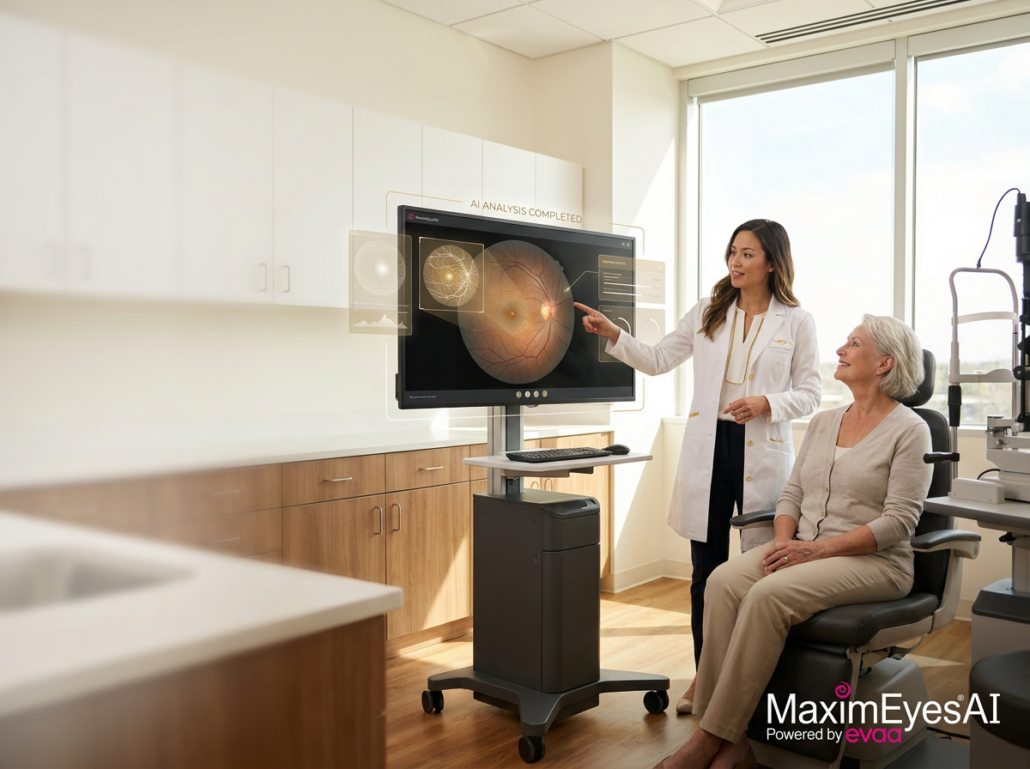
He envisions AI becoming another layer of clinical support.
“AI should act as a second set of eyes, supporting doctors with image analysis and pattern recognition—not replacing them. Human oversight remains essential.”
That distinction changes everything.
A second set of eyes doesn’t take away a physician’s expertise. It strengthens it.
Just as modern diagnostic imaging gives clinicians more information than they could gather through observation alone, artificial intelligence has the potential to surface patterns, highlight anomalies, and organize information that supports better decision-making.
The physician remains the physician.
The responsibility remains human.
The final decision always belongs to the clinician.
The Bigger Opportunity Is Happening Outside the Exam Room
Ironically, the greatest impact AI is having today isn’t diagnosing disease.
It’s helping practices operate more effectively.
Across the country, independent practices are facing many of the same challenges:
- Staffing shortages
- Growing administrative workloads
- Increasing insurance complexity
- Higher patient expectations
Teams aren’t struggling because they lack talent. They’re struggling because there simply aren’t enough hours in the day.
This is where AI is already proving its value.
Not by replacing employees, but by taking repetitive administrative work off their desks. For example:
- Answering routine phone calls
- Helping schedule appointments
- Assisting with documentation
- Supporting billing workflows
- Reducing manual data entry
These are tasks that consume valuable time but don’t require the unique judgment, empathy, or clinical expertise that people bring to every patient interaction.
When those responsibilities become lighter, something important happens.
Staff have more time to focus on patients.
Providers spend less time finishing charts after hours.
Practices become more efficient without asking people to work harder.
Adoption Starts With Trust
One lesson Dr. Henry learned had very little to do with technology itself. It had everything to do with communication.
Like many organizations introducing new tools, his practice initially experienced resistance. Not because the staff disliked the technology. Because they needed to be part of the proceses.
The solution wasn’t another software update.
He involved his team early, explaining why the change was being made, answering questions honestly, and providing meaningful training before asking people to change how they worked.
When his staff understood that AI was there to support them—not evaluate them or replace them—the conversation shifted.
Technology adoption isn’t just about implementation.
It’s about trust.
AI Should Make Your Team More Human, Not Less
One of the greatest misconceptions surrounding AI is that automation somehow removes the human element from healthcare. In reality, the opposite should happen.
Every minute your front office staff spends answering the same routine questions is a minute they aren’t greeting the patient standing in front of them.
Every hour a provider spends completing documentation after the clinic closes is an hour they aren’t spending with family.
Every repetitive administrative task consumes time that could be spent listening, educating, or building relationships.
Good technology doesn’t reduce humanity. It creates more space for it.
The Future Still Requires Human Judgment
Artificial intelligence will become more capable over the coming years. It will:
- Recognize patterns faster.
- Analyze larger amounts of data.
- Support increasingly sophisticated clinical workflows.
But none of that changes the clinician’s role.
As Dr. Henry points out, AI should never become the final decision-maker.
Just as calculators didn’t eliminate the need to understand mathematics, AI shouldn’t eliminate the need for clinical expertise.
The strongest practices will be those that combine technology with experienced professionals who know how—and when—to use it.
The Conversation Shouldn’t Start With AI. It Should Start With Your Workflow.
AI will continue to evolve, and there will always be another product promising to transform healthcare. The practices that benefit most won’t necessarily be the first to adopt every new innovation. They’ll be the ones that understand where their biggest operational challenges exist and choose technology that solves those problems thoughtfully.
For some practices, that may mean reducing the burden of documentation. For others, it may be improving patient communication, streamlining scheduling, or automating repetitive administrative work that keeps talented staff from focusing on higher-value responsibilities.
The common thread isn’t artificial intelligence. It’s workflow.
When technology strengthens how a practice operates, your patients feel the difference, staff feel the difference, and providers do too.
Take the Next Step Toward a Smarter Workflow
If you’re beginning to explore how AI might fit into your practice, start by understanding where workflow automation can create the greatest impact.
That’s why we created Why Eye Care Practices Are Rethinking Workflow Automation, a practical guide designed to help practice owners evaluate today’s technology without the hype. Inside, you’ll learn where leading practices are applying workflow automation, the questions to ask before investing in AI, common implementation mistakes to avoid, and how to identify opportunities that can improve efficiency without compromising the patient experience.
Whether you’re simply curious about AI or actively evaluating new solutions, this guide will help you approach the conversation with greater confidence and clarity.
Download your free copy of Why Eye Care Practices Are Rethinking Workflow Automation.
