Beyond Diagnostics: Where AI Is Driving Real Efficiency in Eye Care Practices

Artificial intelligence is often discussed in eye care through the lens of diagnostics. Imaging, screening, and early disease detection continue to dominate the conversation.
But in day-to-day practice, many of the most immediate gains are happening outside the exam room.
For optometry practices, particularly those expanding into myopia management, the growing challenge is not clinical capability. It is operational capacity.
Myopia Management is Expanding the Workload
As myopia management becomes a larger part of care delivery, practices are seeing a shift in both volume and complexity.
Patients require more frequent visits, ongoing monitoring, and consistent communication. That translates into increased demand for scheduling, insurance verification, and front-office coordination.
With nearly half of the global population projected to be myopic by 2050, that demand is expected to continue rising.
For many practices, the pressure is already being felt at the front desk.
A Familiar Operational Strain
At Hermann & Henry Eyecare, Dr. Morgan Murphy and Dr. Jay Henry describe a workflow familiar to many optometrists.
Front desk teams manage high call volumes while coordinating scheduling, insurance verification, and patient flow. These tasks are not sequential. They happen simultaneously, often with limited time and staff.
The result is a reactive environment, where teams are focused on keeping up rather than staying ahead.
Where AI is Making a Practical Impact
In this context, AI is not being applied as a broad solution. Its value is showing up in targeted areas where workflow friction is highest.
Shifting insurance work earlier
Insurance verification and prior authorization remain persistent bottlenecks.
When handled at check-in, they create delays and increase the likelihood of errors. Moving these tasks earlier in the process allows staff to resolve issues in advance.
Dr. Morgan Murphy with Hermann & Henry Eyecare noted that completing insurance authorization and retrieving information ahead of the visit reduced front-desk strain and improved billing efficiency.
“Having that information ready before the patient even walks in takes pressure off the front desk and keeps the billing process moving without delays,” said Dr. Murphy.
Managing routine patient communication
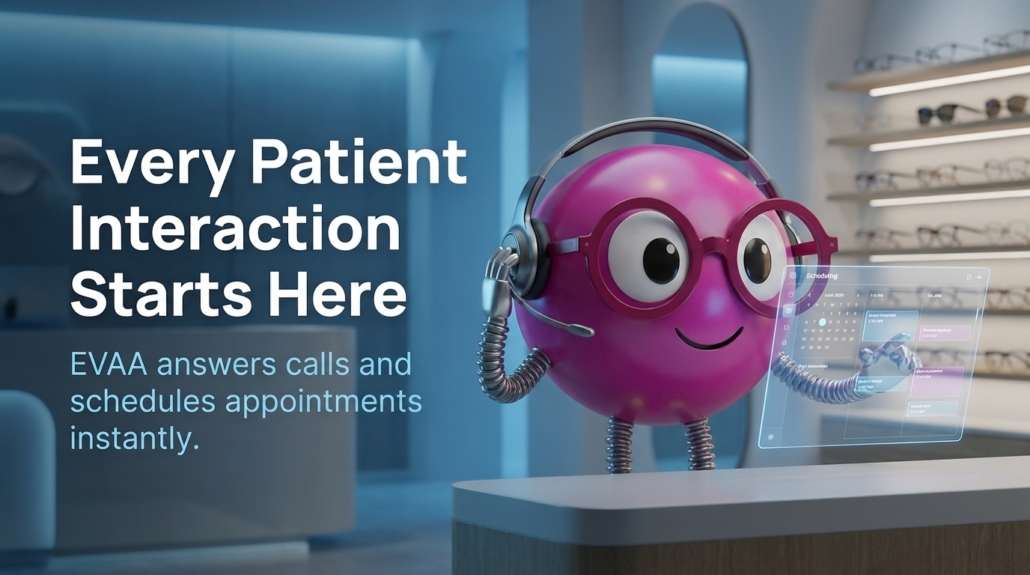
EVAA handles incoming calls and schedules appointments instantly, improving patient access and front desk efficiency.
Myopia care introduces more frequent touchpoints with patients and families, which increases communication demands.
AI-supported tools can help manage routine inquiries and scheduling requests, reducing the volume of interruptions staff must handle throughout the day.
This allows teams to focus on more complex or patient-specific needs.
Supporting more stable scheduling
Recurring care models place additional pressure on scheduling systems.
Without structure, schedules can become inconsistent, leading to gaps, overbooking, and inefficiencies in patient flow.
AI-supported scheduling helps create more predictable patterns, improving coordination across the day.
“When we are closed, patients are still scheduling. When our staff is asleep, EVAA is still working for us,” said Dr. Jay Henry, Hermann and Henry Eyecare.
Improving downstream billing workflows
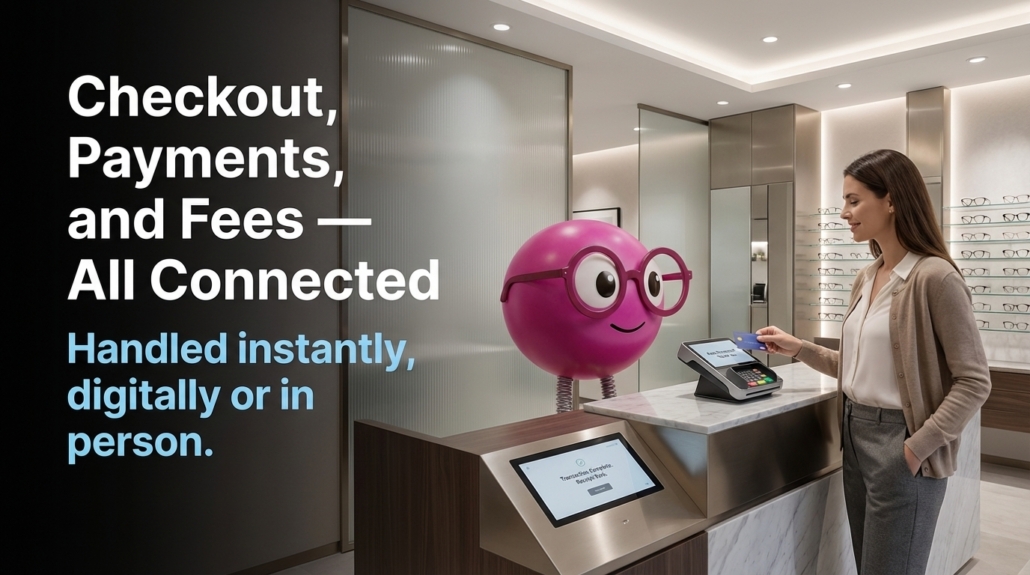
EVAA streamlines checkout by managing payments, fees, and transactions seamlessly, whether digital or in person.
Many billing challenges originate at the front desk, where incomplete or inconsistent information is captured under time pressure.
As front-end processes become more structured, billing workflows tend to follow.
Dr. Murphy observed improved billing efficiency as front desk processes stabilized. Dr. Henry has similarly emphasized the importance of consistent, accurate data at intake to reduce friction in the revenue cycle.
Operational Efficiency as a Priority
Administrative workload remains a significant factor in practice performance and staff sustainability.
As optometry practices expand into services like myopia management, the ability to manage operational complexity becomes increasingly important.
AI is beginning to support this shift, not by replacing staff, but by reducing manual workload and improving how tasks are distributed across the workflow.
A Practical Perspective on AI in Eye Care
The role of AI in eye care is evolving beyond diagnostics.
Its most immediate value lies in improving how practices operate day to day. Reducing repetitive tasks, improving workflow timing, and supporting more consistent data flow.
These are incremental changes, but they have a cumulative effect on efficiency, staff experience, and patient flow.
Ready to Reduce Manual Workload?
As demand for eye care continues to grow, operational performance will play an increasingly important role in your practice’s success.
AI is not only advancing clinical capabilities. It helps practices manage the increasing complexity of patient care delivery.
For many, that is where the most meaningful impact is already being realized.
Curious what connected AI actually looks like in practice?
See EVAA in action at EVAA.AI.
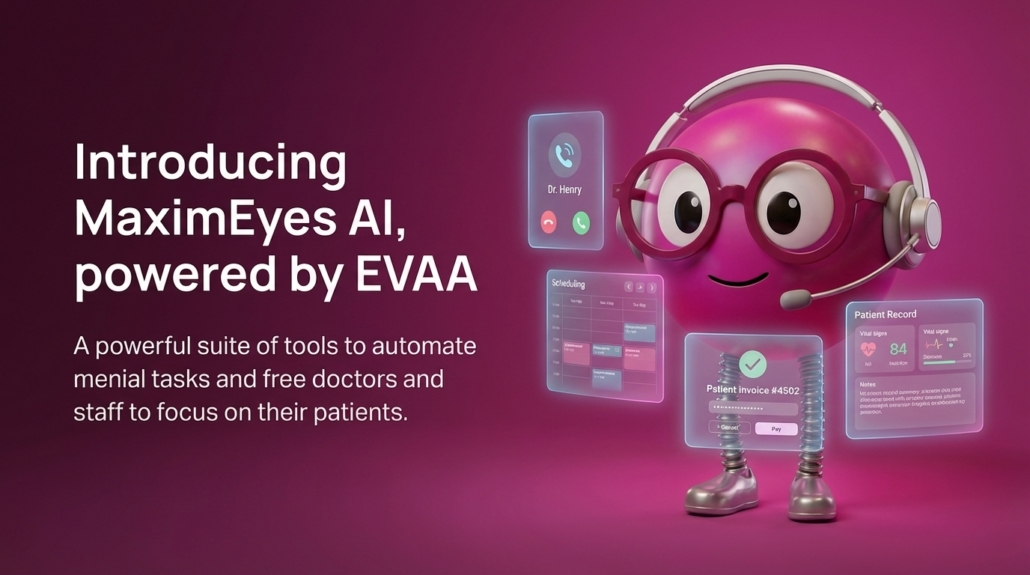
MaximEyes AI, powered by EVAA, helps automate scheduling, billing, and patient workflows, allowing practices to focus more on patient care.

