How Hermann & Henry Eyecare Improved Efficiency and Profitability with Artificial Intelligence Workflows
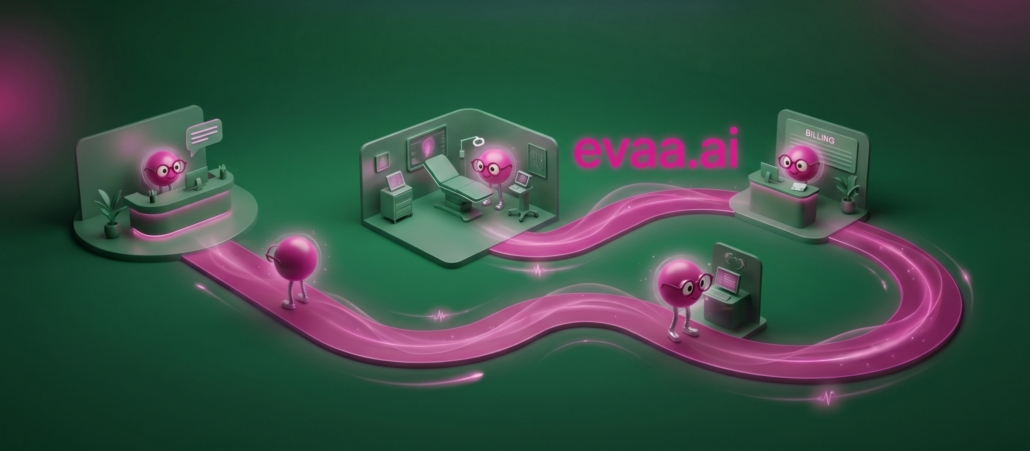
Most practices are still operating with disconnected systems.
This is what happens when the workflow actually works. Join our May 7 webinar to see how.
→ Register for the webinar
Growth shouldn’t create more work
For most practices, it does.
More patients mean more calls, more documentation, and more billing complexity. The schedule fills up, but so does everything behind it.
The problem isn’t demand.
It’s what happens around it.
Most teams are working harder just to keep up.
A different approach to scaling a practice
Hermann & Henry Eyecare didn’t accept that tradeoff.
Based in Pickerington, Ohio, the practice has grown from two doctors to a three-doctor, 18-person team over more than 25 years.
But growth didn’t come with more administrative overhead. It came from removing it.
“We’ve been with MaximEyes for over 25 years and couldn’t be happier. They’ve grown with us and always stayed ahead of the curve.”
— Jay Henry, OD, MS
The real issue: the workflow is broken
Most practices aren’t lacking tools. They’re lacking connection.
Scheduling lives in one place. Documentation in another. Billing somewhere else. Each piece works, but the workflow doesn’t.
That’s where time is lost:
- rework
- duplicate entry
- delays between steps
And it compounds across the day.
Hermann & Henry focused on fixing that.
Documentation stopped spilling into the evening

What changed
Charting wasn’t pushed to the end of the day. It was handled during the visit.
“We have far fewer clicks per patient and can see 3–4 more patients per doctor per day.”
— Morgan Murphy, OD, FAAO
This isn’t just efficiency. Its capacity.
Billing stopped consuming hours of staff time
Eligibility checks, claims, and reconciliation no longer require constant attention.
“We don’t have a staff member spending eight or nine hours a day on that anymore.”
— Jay Henry, OD, MS
Instead of fixing errors after submission, the process was corrected before it started.
The front desk stopped reacting all day
Calls, scheduling, and communication were no longer interrupt-driven.
“EVAA.AI has been phenomenal. It saved us so much time in scheduling and dropped phone volume dramatically.”
— Jay Henry, OD, MS
Staff could focus on patients. Not the phone.
The impact is measurable
This is where most conversations stop. But this is where it matters.
- 40% reduction in claim errors
- Claims processed in hours, not days
- 3–4 additional patients per doctor, per day
- Significant reduction in front desk workload
- Noticeable improvement in patient experience
“AI hasn’t replaced our staff. It’s empowered them.”
— Jay Henry, OD, MS
Why most practices don’t get here
Because most solutions are point solutions.
They improve one step, but leave the workflow fragmented.
You can optimize scheduling. Or charting. Or billing.
But if they don’t connect, the inefficiency remains.
That’s the difference.
What you’ll see on May 7
We’re not walking through theory. We’re walking through what actually changed.
In this session, you’ll see:
- Where time is lost across a typical patient visit
- How disconnected systems create rework and delays
- What changes had the biggest impact at Hermann & Henry
- What a connected workflow actually looks like in practice
See it in your own context
If your team is spending time:
- finishing charts after hours
- managing constant interruptions
- reworking billing issues
This will feel familiar.
Join us on May 7 to see what changes when the workflow works.
→ Register for the webinar
About EVAA

EVAA is an AI workflow layer that connects clinical documentation, patient communication, and revenue cycle processes inside your existing systems.
Not another tool.
A way to make the entire workflow work.

