The Practice Patients Can Feel
Patients have no idea what technology your practice uses.
They don’t know which EHR you’re running, how appointments move through your scheduling system, or how insurance is verified before they arrive. They never see the documentation process that follows their visit or the work that happens behind the scenes to ensure claims are submitted correctly. In fact, most patients will never think about your workflows at all.
And yet they experience this technology every time they walk through your doors.
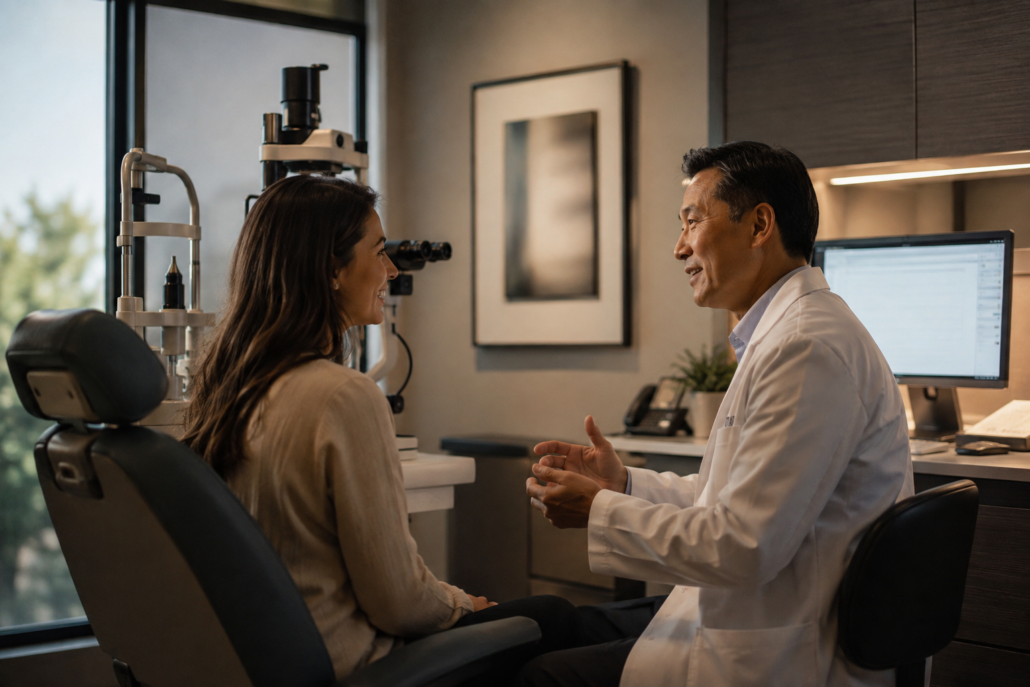
They experience it in the confidence of the person who answers the phone. They experience it in the ease of scheduling an appointment, in the way the front office welcomes them instead of asking them to wait “just one moment,” and in whether their doctor spends the visit looking them in the eye instead of looking at a computer screen. They experience it when billing questions are answered without uncertainty and when follow-up happens exactly when they expect it to.
Patients never see your workflows. They feel them.
That observation has shaped the way we think about the future of eye care.
Rethinking Technology in Eye Care
For years, healthcare technology has been measured by what it could do. Every new system arrived with a longer list of features, another dashboard, another workflow, and another promise to make practices more efficient.
Much of that innovation has been valuable, but somewhere along the way, efficiency became the destination instead of the means. We became so focused on helping practices do more that we rarely stopped to ask what kind of experience all of that technology was actually creating for the people using it.
We believe that is the wrong question.
The future of healthcare should not be defined by how much technology exists inside a practice. It should be defined by how that practice feels to the people who spend their lives there and to the patients who trust it with their care.
Shifting Burdens, Not Commitment
Somewhere along the way, we accepted a version of healthcare that asks an extraordinary amount from the people who care the most.
Every year has brought another responsibility, another regulation, another expectation, and another technology intended to solve a problem. None of those changes seemed unreasonable on their own. In many cases, they represented important progress. Together, however, they created something few people intended.
Physicians found themselves dividing their attention between patients and documentation. Front office teams became experts at managing interruptions instead of welcoming people through the door. Managers began spending more of their time coordinating work than thinking about where the practice should go next.
What changed was never the commitment of the people.
What changed was the weight they were expected to carry.
We don’t believe that should simply be accepted as the cost of modern healthcare.
The people who dedicate their lives to caring for others deserve technology that cares for them in return. Its purpose should not be to demand more attention, introduce more complexity, or require another process to learn. Its purpose should be to quietly carry the work that has gradually accumulated around the practice, allowing physicians, technicians, administrators, and front-office teams to return their attention to the people sitting in front of them.
That belief is the philosophy behind EVAA.AI
Confidence Behind the Scenes
- When we imagine the future of an eye care practice, we don’t imagine one where artificial intelligence becomes the center of attention. We imagine:
- A physician arriving in the morning knowing yesterday’s documentation was completed before they left the office, allowing them to begin the day thinking about patients instead of unfinished charts.
- A front desk team unlocking the doors to find that appointments were booked overnight, routine patient questions were answered while they slept, and the day’s priorities are already organized instead of waiting to be discovered.
- A billing specialist reviewing claims with confidence because every submission has already been examined by a second set of eyes before it ever reaches a payer.
- A practice owner walking through the office and noticing something that has become surprisingly uncommon in healthcare: a team that is fully present because it is no longer carrying every operational detail in its head.
None of those moments would ever appear in a product demonstration. They are not the kind of features that fit neatly into a comparison chart, nor are they the headlines most technology companies choose to write about. Yet together they create something far more meaningful than another capability.
They create confidence.
When people are no longer consumed by remembering what still needs to be done, they begin listening more carefully. They notice more. They explain more. They have the capacity to be fully present with patients because their attention is no longer divided between the conversation in front of them and the work waiting somewhere behind them.
Patients may never understand why one practice feels different from another, but they recognize the experience immediately. They leave feeling cared for, not because of the technology that supported the visit, but because the technology allowed the people providing that care to be fully present.
Perhaps that is what the future of eye care should look like. Not a practice with the longest list of AI features or the most impressive demonstrations, but one where technology fades quietly into the background because it is doing exactly what it should have been doing all along: supporting the people who care for patients instead of asking those people to support the technology.
That is the practice patients can feel.
Discover Your Practice’s Potential
If this vision resonates with you, the next question isn’t whether your practice needs more technology. It’s whether your practice is operating the way you want it to.
Our Practice Opportunity Profile was created to help practice leaders answer that question. In just a few minutes, you’ll receive a personalized assessment that identifies opportunities to improve the workflows shaping your team’s daily experience and, ultimately, the experience your patients have every time they walk through your doors.
Because creating a practice that feels different begins with understanding where your greatest opportunities exist.
Take the Practice Opportunity Profile and discover what your practice could become.

